If you've been diagnosed with a herniated disc, you know the debilitating pain, numbness, and limitations it can bring to your daily life. Whether it's radiating sciatic pain down your leg, difficulty bending, or that constant ache that won't quit, herniated discs can significantly impact your quality of life.
The good news? You don't have to choose between surgery and living with pain. An integrative approach combining chiropractic care and acupuncture offers a powerful, non-invasive pathway to healing and pain relief.
Understanding Herniated Discs
A herniated disc occurs when the soft, gel-like center of a spinal disc pushes through a tear in the tougher exterior casing. This can put pressure on nearby nerves, causing pain, inflammation, numbness, and weakness. Common locations include the lumbar spine (lower back) and cervical spine (neck).
Common symptoms include:
- Sharp, shooting pain in the back or legs
- Numbness or tingling in extremities
- Muscle weakness
- Pain that worsens with certain movements
- Reduced range of motion
The Chiropractic Approach
Chiropractic care focuses on restoring proper spinal alignment and function through targeted adjustments and manual therapy.
How chiropractic helps herniated discs:
Spinal Decompression: Gentle traction techniques create negative pressure within the disc, encouraging the herniated material to retract and reducing nerve compression.
Spinal Adjustments: Controlled manipulations restore proper alignment, reducing pressure on affected nerves and improving overall spinal mechanics.
Flexion-Distraction Technique: A specialized, non-thrusting adjustment that gently stretches the spine, increasing disc height and reducing herniation pressure.
Improved Mobility: Restoring proper movement patterns prevents compensation injuries and promotes natural healing.
Postural Correction: Addressing underlying postural issues that may have contributed to the disc herniation in the first place.
The Acupuncture Approach
Traditional Chinese Medicine views herniated disc pain as a disruption in the flow of Qi (vital energy) and blood, often involving Kidney deficiency, Qi and Blood stagnation, and invasion of cold and dampness.
How acupuncture helps herniated discs:
Pain Relief: Acupuncture stimulates the release of endorphins and enkephalins, your body's natural pain-relieving chemicals, providing immediate and cumulative pain reduction.
Anti-Inflammatory Effects: Research shows acupuncture reduces inflammatory markers, decreasing swelling around the affected disc and nerves.
Muscle Relaxation: Tight, spasming muscles around a herniated disc create additional pain and restriction. Acupuncture releases trigger points and relaxes muscle tissue.
Nerve Function: Acupuncture can help restore proper nerve conductivity and reduce radiating pain patterns.
Improved Circulation: Enhanced blood flow brings healing nutrients to the injured area and removes inflammatory byproducts.
Key Acupuncture Points for Herniated Discs:
- BL 23 (Shenshu) - "Kidney Shu" - strengthens the lower back
- BL 25 (Dachangshu) - "Large Intestine Shu" - benefits lumbar region
- BL 40 (Weizhong) - "Supporting Middle" - major point for back pain and sciatica
- GB 30 (Huantiao) - "Jumping Circle" - releases sciatic nerve pain
- DU 3 (Yaoyangguan) - "Yang Pass Gate" - strengthens lumbar spine
- Ashi points - tender points directly at the site of pain
Why Combining Both Therapies is Powerful
When used together, chiropractic and acupuncture create a synergistic effect that addresses herniated disc pain from multiple angles:
Structural + Energetic: Chiropractic addresses the physical misalignment while acupuncture harmonizes the body's energy flow and nervous system.
Immediate + Cumulative Relief: Chiropractic adjustments can provide immediate structural relief, while acupuncture's anti-inflammatory effects build over time.
Mechanical + Biochemical: Chiropractic restores proper biomechanics while acupuncture influences pain pathways, inflammation, and healing at the cellular level.
Active + Passive Healing: Chiropractic mobilizes the spine while acupuncture supports the body's innate healing response.
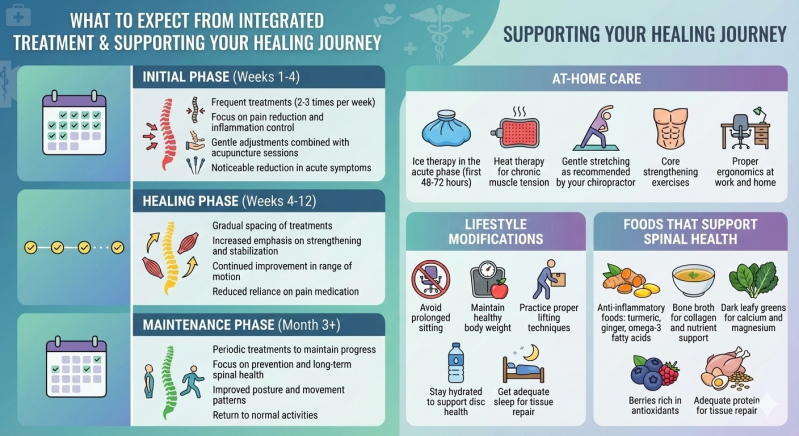
What to Expect from Integrated Treatment
Initial Phase (Weeks 1-4):
- Frequent treatments (2-3 times per week)
- Focus on pain reduction and inflammation control
- Gentle adjustments combined with acupuncture sessions
- Noticeable reduction in acute symptoms
Healing Phase (Weeks 4-12):
- Gradual spacing of treatments
- Increased emphasis on strengthening and stabilization
- Continued improvement in range of motion
- Reduced reliance on pain medication
Maintenance Phase (Month 3+):
- Periodic treatments to maintain progress
- Focus on prevention and long-term spinal health
- Improved posture and movement patterns
- Return to normal activities
Supporting Your Healing Journey
At-Home Care:
- Ice therapy in the acute phase (first 48-72 hours)
- Heat therapy for chronic muscle tension
- Gentle stretching as recommended by your chiropractor
- Core strengthening exercises
- Proper ergonomics at work and home
Lifestyle Modifications:
- Avoid prolonged sitting
- Maintain healthy body weight
- Practice proper lifting techniques
- Stay hydrated to support disc health
- Get adequate sleep for tissue repair
Foods that Support Spinal Health:
- Anti-inflammatory foods: turmeric, ginger, omega-3 fatty acids
- Bone broth for collagen and nutrient support
- Dark leafy greens for calcium and magnesium
- Berries rich in antioxidants
- Adequate protein for tissue repair
The Evidence
Research increasingly supports the use of both chiropractic care and acupuncture for herniated disc pain:
- Studies show spinal manipulation can provide significant pain relief and functional improvement for lumbar disc herniation
- Acupuncture has been shown to reduce pain intensity and improve quality of life in patients with herniated discs
- Combination therapy approaches often show superior outcomes compared to single modality treatment
- Both therapies have excellent safety profiles with minimal side effects
Is This Approach Right for You?
An integrative chiropractic and acupuncture approach may be ideal if you:
- Want to avoid or delay surgery
- Seek drug-free pain management
- Have tried conventional treatments with limited success
- Want to address the root cause, not just mask symptoms
- Are committed to active participation in your healing
Important note: Severe cases with progressive neurological symptoms (significant weakness, loss of bowel/bladder control) require immediate medical evaluation and may need surgical intervention.
Your Path Forward
Living with herniated disc pain doesn't mean accepting a life of limitation and discomfort. By combining the structural expertise of chiropractic care with the holistic healing power of acupuncture, you can address your pain from multiple dimensions and support your body's natural capacity to heal.
Every spine is unique, and every herniated disc presents differently. A personalized treatment plan that honors your individual pattern of disharmony and structural needs is essential for optimal results.
Ready to explore how integrative care can help you find relief from herniated disc pain? Your journey to a pain-free life begins with understanding that you have options beyond medication and surgery.
Disclaimer: This blog post is for educational purposes only and does not constitute medical advice. Always consult with qualified healthcare providers, including your chiropractor and acupuncturist, before beginning any new treatment program. If you experience severe or worsening neurological symptoms, seek immediate medical attention.
About Rozegold Acupuncture
Dr. Ariela Rozegold, D.A.O.M., L.Ac., brings a unique perspective to integrative healing, combining her doctorate in Chinese Medicine with a deep understanding of how different modalities work together to support optimal health and recovery.
Add comment
Comments